
The essence of strategy
is choosing what not to do.
— Michael Porter
Most strategy fails not because it's wrong — but because it tries to do too much. The brief is too wide, the positioning covers every base, the idea gets diluted before it reaches the page. My job is to find the single true thing and cut everything else until only that remains.
I've done this for governments, multinationals, NGOs and startups across five continents. The problem is always the same: too much noise, not enough signal. The answer is always the same too — find the insight nobody else has looked at, build the architecture around it, and hold the line when everyone wants to add more back in.
That's not a methodology. It's a discipline.
HOW I THINK
Every strategy starts with three questions: what does the competition own, what does the audience actually want, and what is the one true thing about this brand? Where those three things meet — that's the position. Everything else gets cut.
I call it the strategy of subtraction. Not because simplicity is a style preference, but because every brief I've ever seen has been too wide, every strategy has tried to say too much, and every campaign that's failed has done so because the insight got diluted somewhere between the deck and the execution.
The work on this page shows what happens when you hold the line.
CAMPAIGN STRATEGY
Middle-aged Australian cruisers and young Māori men. You couldn't find two more different audiences. But the strategic process is identical: understand them deeply enough to stop talking at them and start talking to them. When you get that right, the creative almost writes itself — whether it's selling a holiday or saving a life.
Honeyboomers ‘Carnival’
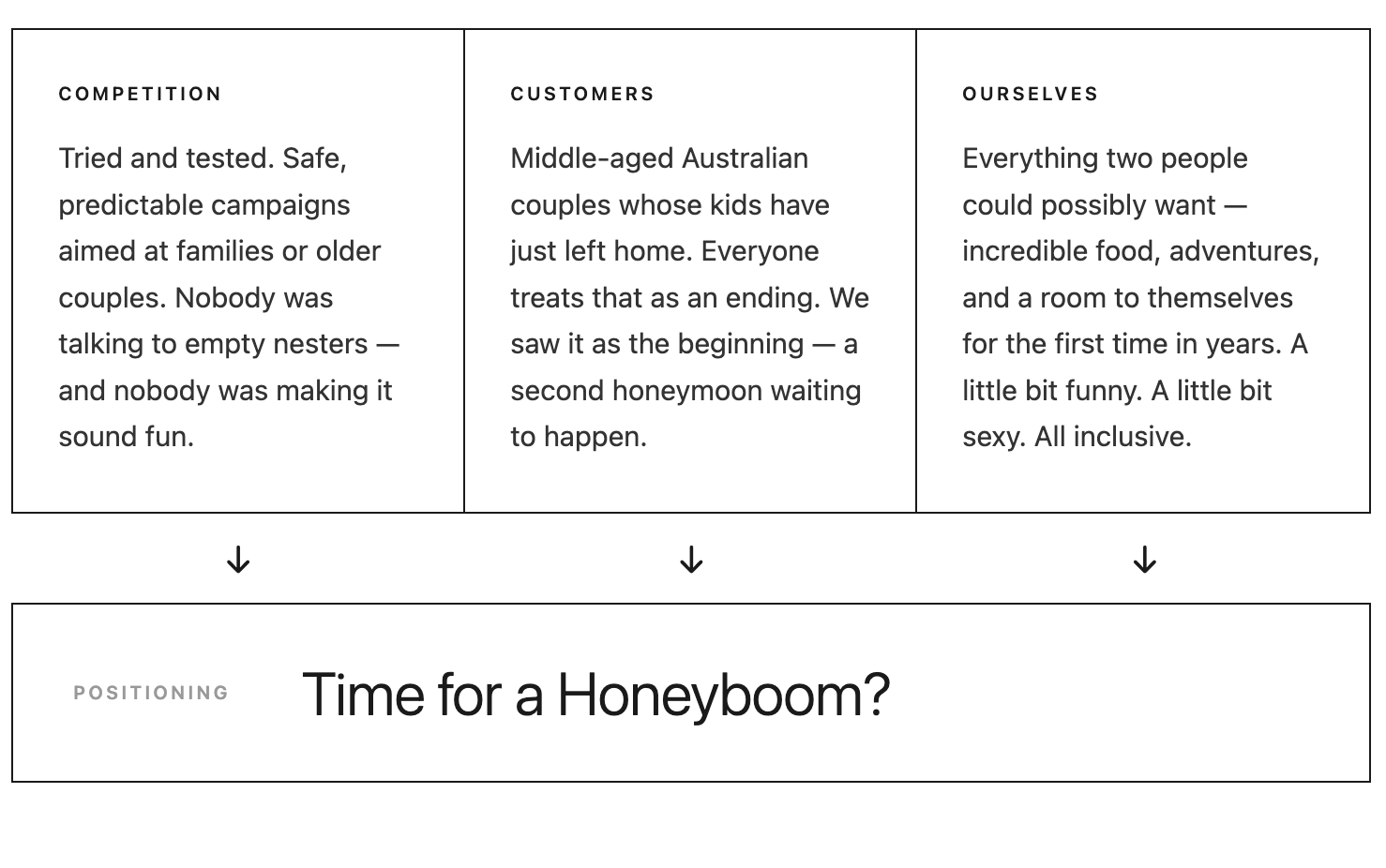
Everyone was talking about empty nesters like it was a loss. We flipped it — what if the kids leaving home was the best thing that ever happened to your relationship? We commissioned national research to prove the tension, coined the term 'Honeyboomers™', got a relationship expert on board, and built a campaign around a story the media wanted to tell.
66 domestic features. 20M+ opportunities to see. International coverage delivering a further 17M OTS. A first-ever 'flirt class' at sea that generated its own media cycle. And the result that actually mattered — an off-peak sales uplift double that of school holidays, achieved for the first time ever. Carnival trademarked the name and made it a permanent sub-brand.
Ghost Chips — NZTA
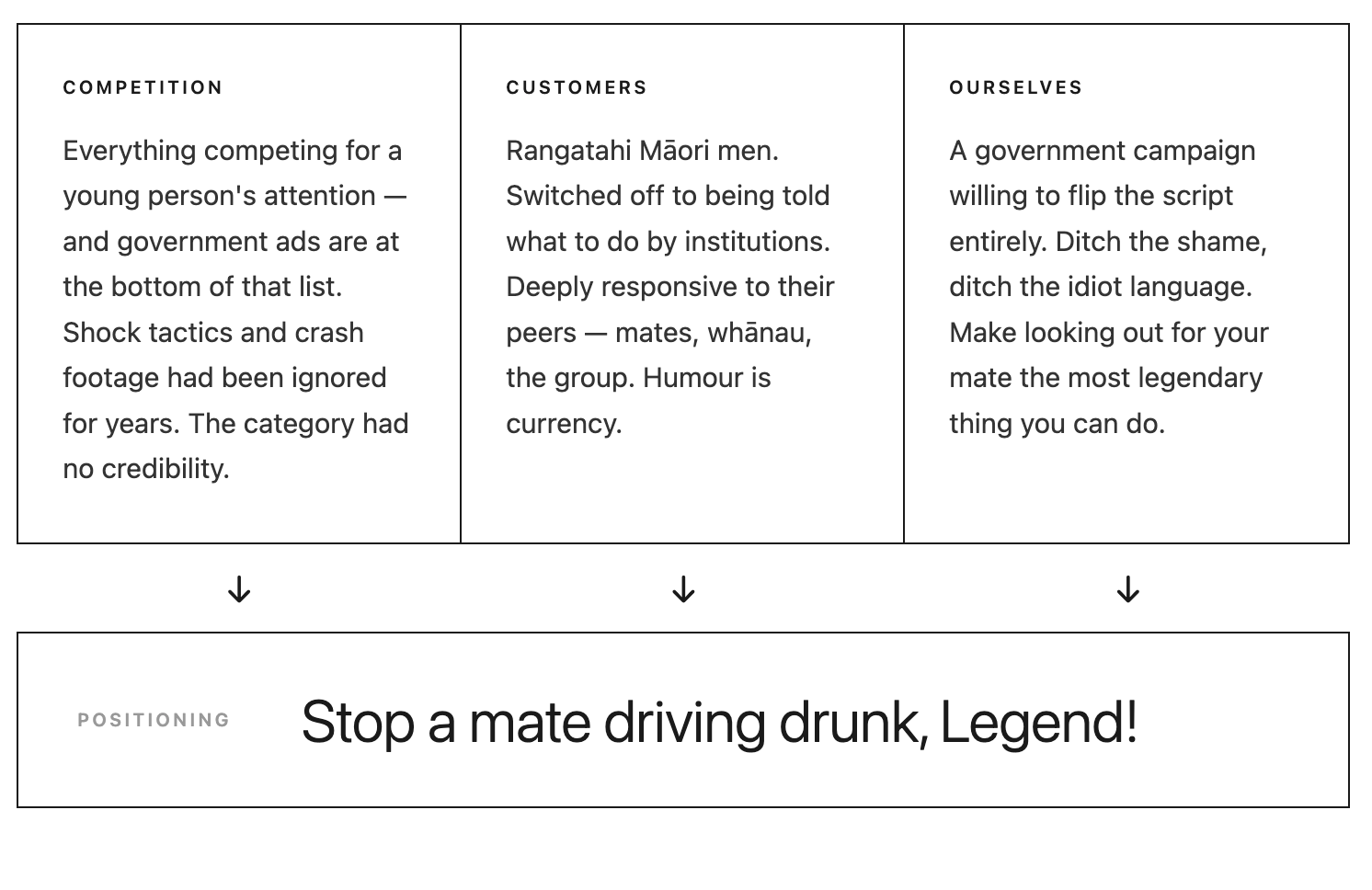
Young Māori men weren't ignoring drink driving ads because they didn't understand the risk. They were ignoring them because the messaging never reflected their reality. Shock tactics and sirens were irrelevant to an audience that valued mateship above everything — including authority. So we flipped the problem. Don't target the driver. Target the mate. Make speaking up feel legendary instead of awkward. The answer wasn't a safety campaign — it was a cultural artifact that happened to save lives.
1 million YouTube views in two weeks — unprecedented in New Zealand at the time. Hundred of Facebook groups. Thousands of memes. 90% prompted recognition across the entire country. 75% of the target audience said it made them more likely to stop a friend drink driving. 50% drop in teen drink driving over the following five years. #1 most searched term in New Zealand on Google the week it launched. Phrases entered the national vernacular and became NZ words of the year. Still used today. Referenced in a Pixar film. You can still buy the merch.
Awards: D&AD Yellow Pencil · Gold Effie — The Hardest Challenge · Grand Effie — Sustained Success · NZ Effie Campaign of the Year · Featured in NZ On Screen · Te Ara Encyclopedia of New Zealand · Wikipedia · Effies

BRAND STRATEGY
Different sectors. Different audiences. Different problems. But the approach doesn't change: find the truth at the centre of the business, then build everything outward from there. That's what good strategy does — it makes the answer feel obvious in hindsight.
Journey Early Learning
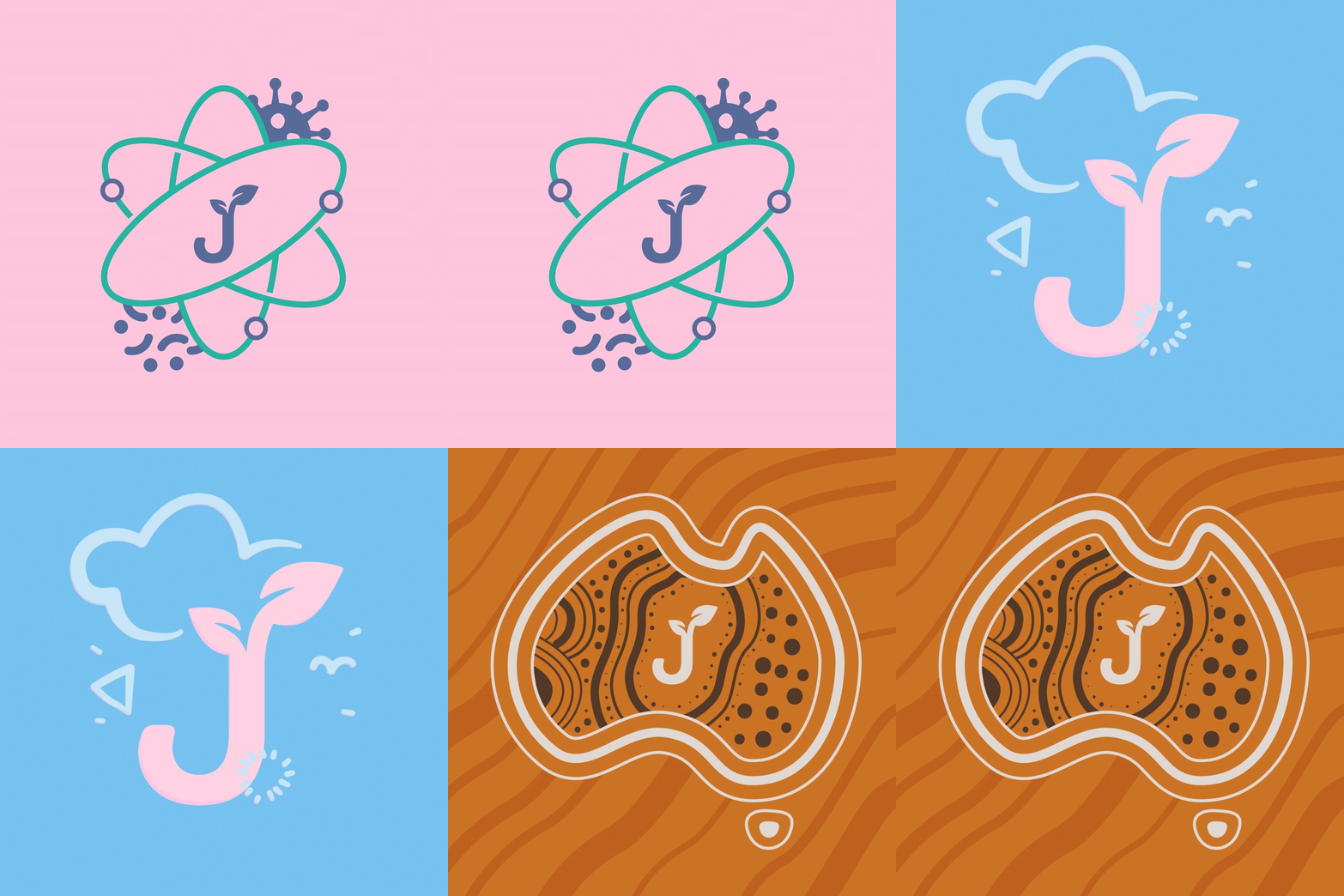
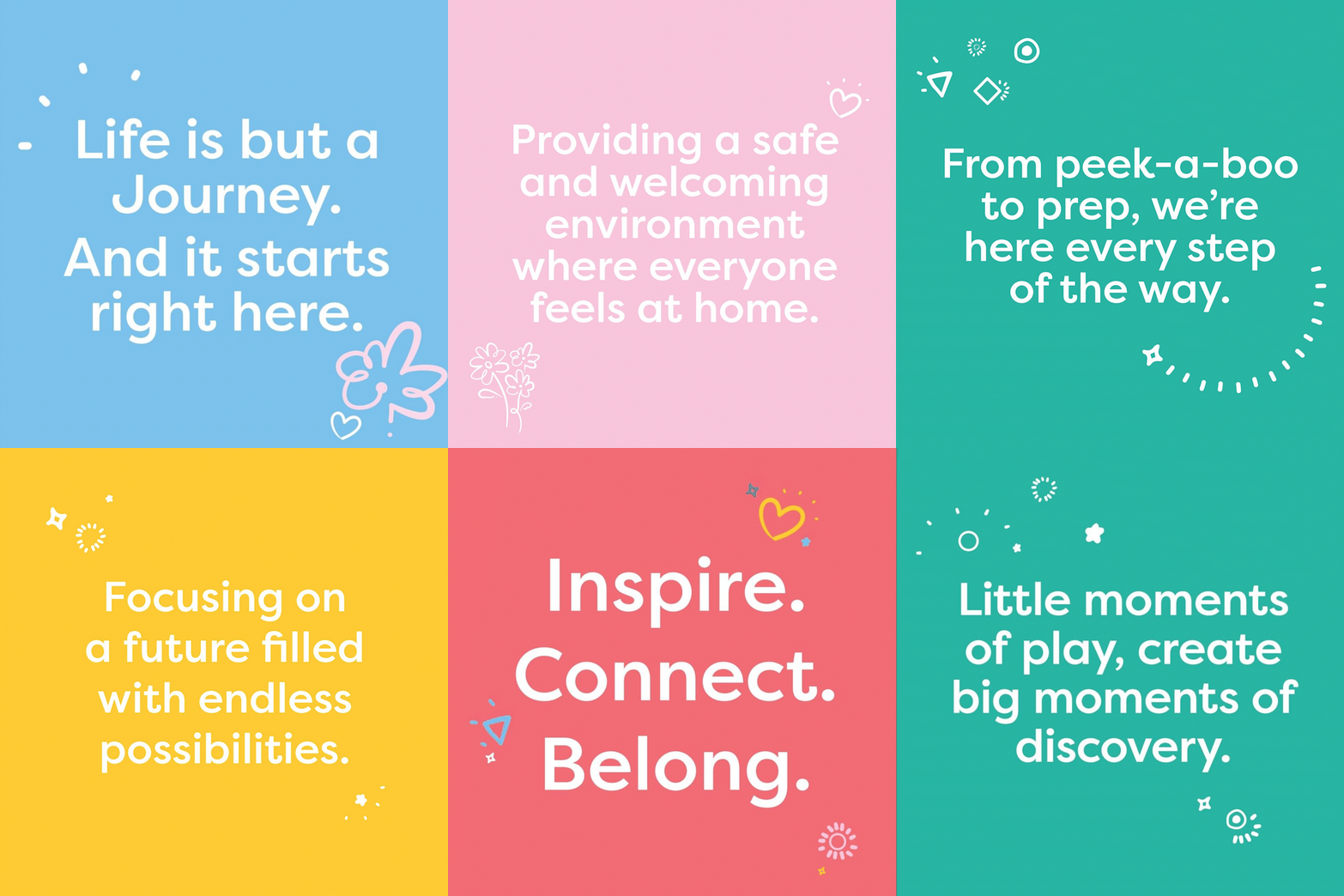
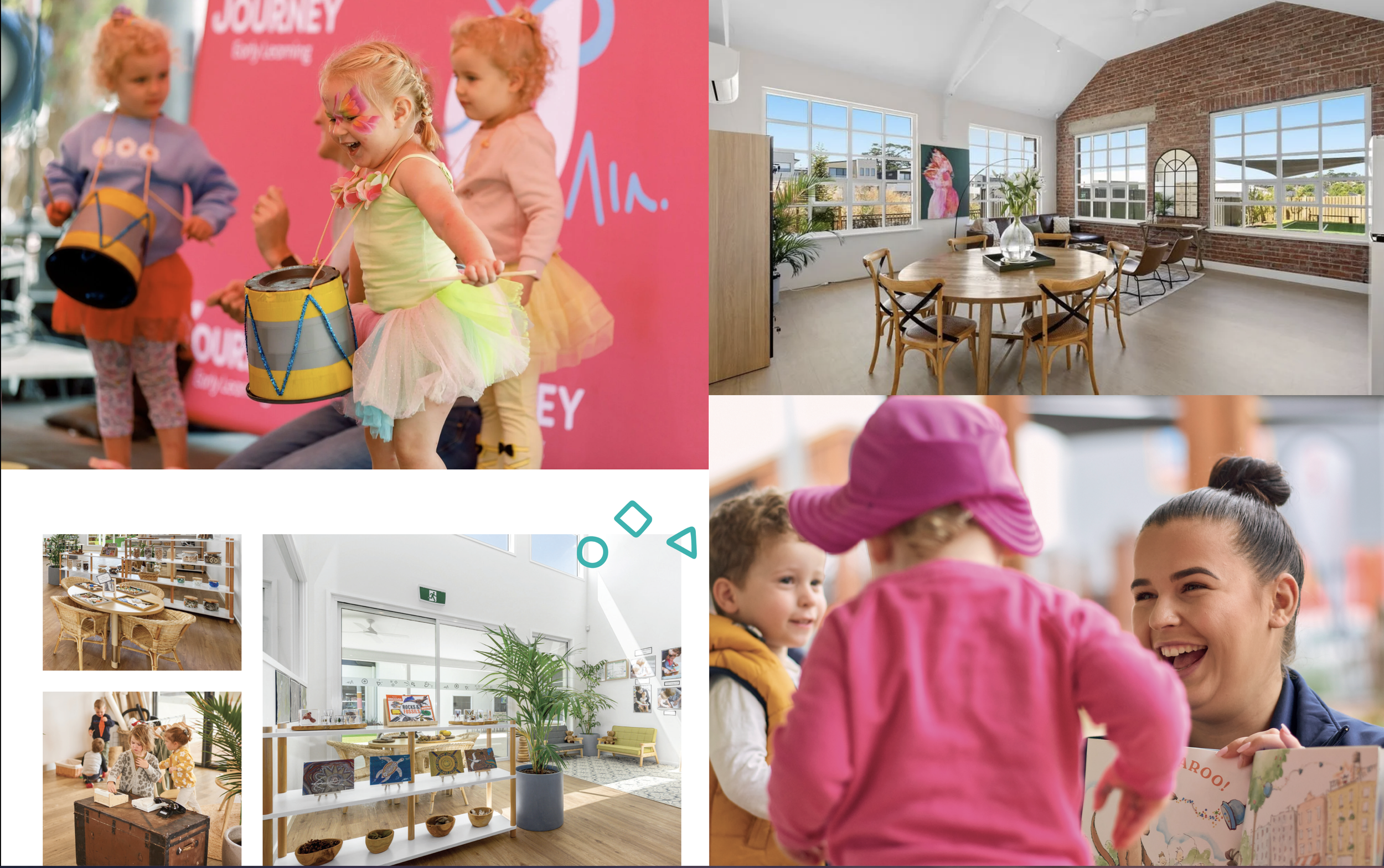
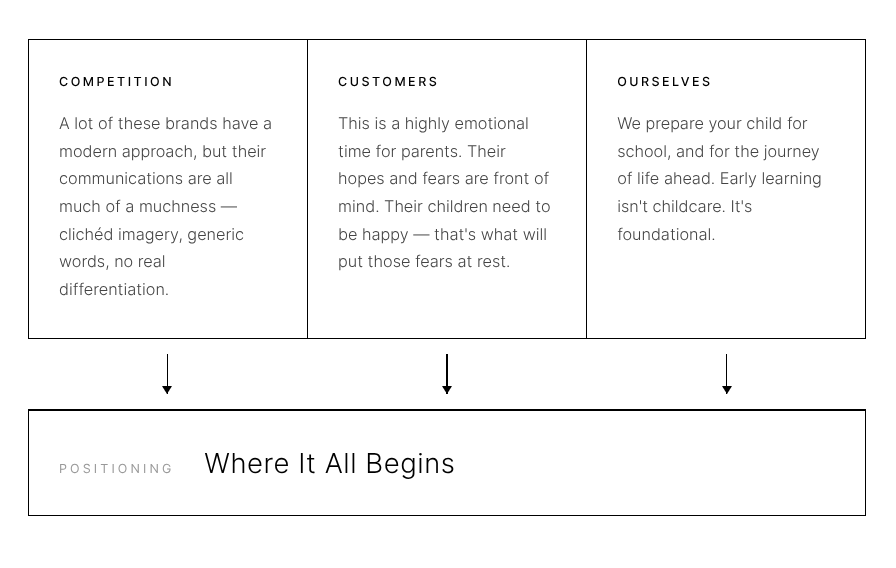
A brand with mixed messages and no clear identity. The expected answer was a bigger, more complicated rebrand. We did the opposite — cut everything back to the single truth at the heart of the business. Early learning isn't childcare. It's where it all begins.
From that one insight: brand positioning, personality, tone of voice, social strategy, web UX, content strategy and COVID-19 rollout.
Then a sub-brand, Future Foodies, built around a proprietary positioning framework — three inputs (competition, customers, brand truth) → one position: For the Love of Food. Brand launched nationally across new centre openings with PR, influencer, events and digital. Journey has gone from 17 centres to 47.

Outside Assembly
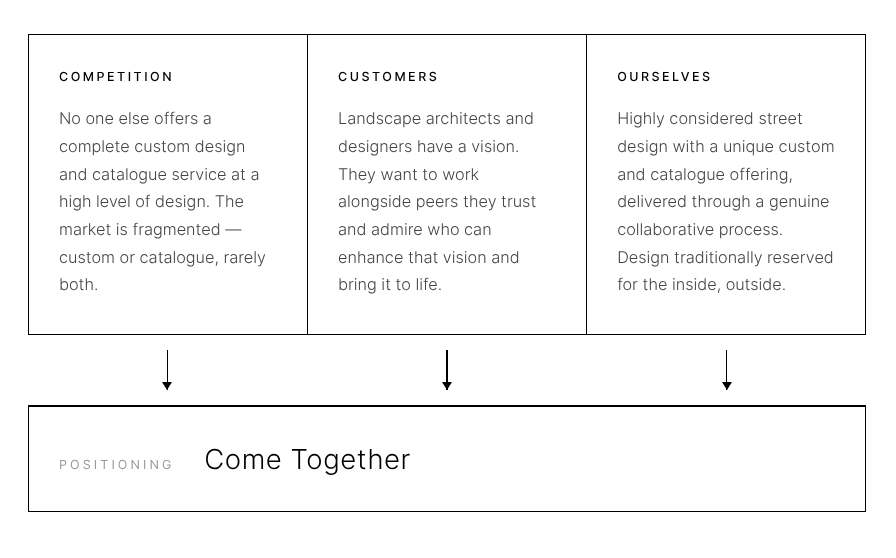
Two street designers breaking away from established firms and entering a market full of corporate voices. The temptation was to position around craft. We positioned around process — because their genuine collaboration model wasn't just a nice-to-have, it was the only thing nobody else in the category could claim. Made their way of working the brand story rather than a feature of it. Successfully launched into a competitive market with a voice that resonated immediately with both clients and communities.


CLIENT PARTNERSHIPS






Expertise
Brand and Positioning
Finding the single thing that makes you worth choosing. Not a list of attributes — the one idea that earns a place in culture and makes everything else coherent.
Digital and Social
Social strategies that treat platforms as distribution systems for ideas, not publishing schedules. I build around how people actually behave online — what stops the scroll, what gets shared, what builds a community.
Behaviour Change
The hardest creative problem there is. You can't tell people what to do — you have to make them want to. Deep understanding of audience psychology, cultural context and the moments where change is actually possible.
Cultural Insight
What's actually happening out there. Not trends decks — real understanding of how audiences think, what they share, what they reject and why. Particularly strong with hard-to-reach audiences including Māori and Pasifika communities.
Campaign Integration Ideas that hold their spine across every channel — hero video to TikTok to LinkedIn to OOH — without becoming a different thing on every platform.
AI Integration
I was working in AI b before Ai. I was QA Lead on Google Bard — the AI that became Gemini. I understand how AI thinks, where it helps and where it needs a human in the loop. I use it to work faster without thinking less.
AGENCY COLLABORATIONS
